What do contractors charge for concrete work?
What Do Contractors Charge for Concrete Work? A Comprehensive Guide to Pricing Your Project
The decision to embark on a concrete project, whether it's a new driveway, a foundational slab for a home addition, a decorative patio, or commercial paving, always comes with a fundamental question: "How much will this cost?" Unlike a simple retail purchase, concrete work pricing is highly variable, influenced by a multitude of factors that contractors must consider to provide an accurate and fair quote. Understanding these variables is key for homeowners and businesses alike to interpret bids and budget effectively.
The cost of concrete work is rarely a flat rate per square foot across all projects. It's a complex equation involving materials, labor, site conditions, specialized equipment, and the intricacies of the design. A contractor's charge reflects not just the physical concrete being poured, but the expertise, efficiency, and guarantees they provide.
At Cincos Concrete, serving the thriving communities of Houston, Humble, Spring, and Atascocita, Texas, for over 20 years, we understand the importance of transparent and competitive pricing. We've built our reputation on delivering exceptional value, which comes from clearly outlining the components of our charges and ensuring clients understand what they are paying for.
This article will break down the various elements that contribute to the cost of concrete work. We'll explore the common pricing structures, delve into the factors that drive prices up or down, provide estimated cost ranges for different project types, and offer advice on how to secure accurate and comprehensive quotes for your specific needs.
Understanding the Core Components of Concrete Pricing
When a concrete contractor provides a quote, it's typically an amalgamation of several key cost categories. Knowing these components helps in understanding the total figure.
1. Material Costs
This is the most straightforward component, but still variable. It includes the cost of the ready-mix concrete itself, which is typically priced by the cubic yard.
Concrete Mix Design: Different strengths (PSI), slump levels, and additive requirements (e.g., for faster setting, water reduction, or cold weather) will affect the per-cubic-yard price. Specialty mixes are more expensive.
Reinforcement: Steel rebar, wire mesh, or synthetic fibers are crucial for strength and crack control. The type, amount, and complexity of reinforcement directly impact material costs.
Aggregates for Base: Gravel, crushed stone, or sand used for the sub-base beneath the concrete adds to material costs, measured by the cubic yard or ton.
Formwork Materials: Lumber, plywood, or reusable metal forms are needed to shape the concrete. Complex shapes or vertical pours require more extensive and costly formwork.
Other Consumables: This includes vapor barriers, expansion joint materials, curing compounds, and sealers.
2. Labor Costs
Labor is a significant portion of any concrete project's total cost, often accounting for 40% to 50% or more. This includes the wages of all crew members involved.
Skilled Laborers: The basic crew who perform site preparation, move materials, and assist with general tasks.
Form Setters/Carpenters: Highly skilled individuals responsible for building accurate and sturdy forms. Their precision directly impacts the final shape.
Concrete Finishers: Experienced craftsmen who manipulate the concrete surface to achieve the desired finish (e.g., broom, trowel, decorative). Their expertise is paramount for quality.

Equipment Operators: Those operating heavy machinery like excavators, skid steers, or concrete pumps.
Supervision/Foreman: The person overseeing the crew, ensuring efficiency, quality, and safety on site.
Labor costs are influenced by the prevailing wage rates in a given region, the experience level of the crew, and the time required to complete the project efficiently.
3. Equipment Costs
Concrete work requires specialized tools and heavy machinery, and the costs associated with these are factored into the overall price.
Owned Equipment: For larger contractors like Cincos Concrete, who own a significant fleet, these costs include depreciation, maintenance, repairs, fuel, and storage.
Rented Equipment: For specialized tasks or smaller contractors, equipment like concrete pumps, power trowels, excavators, or skid steers may be rented on a daily or weekly basis. Rental fees, delivery charges, and fuel costs apply.
Small Tools & Consumables: Shovels, rakes, hand floats, trowels, vibrators, and safety gear are essential, and their wear-and-tear or replacement is part of doing business.
4. Site Preparation Costs
Before any concrete is poured, the site must be prepared, and this often involves considerable work.
Demolition and Removal: If old concrete, asphalt, or other structures need to be removed, breaking it up, hauling it away, and disposal fees add to the cost. This can range from $2 to $7 per square foot.
Excavation and Grading: Digging out for a slab or foundation, leveling the ground, and ensuring proper drainage and slopes. This can involve heavy machinery and significant labor.
Sub-base Installation: Spreading and compacting gravel or crushed stone to create a stable foundation for the concrete.
Compaction: Ensuring the subgrade and sub-base are properly compacted to prevent settling and cracking, often requiring a vibratory roller or plate compactor.
5. Overhead and Profit
Every legitimate business has overhead costs, which are expenses not directly tied to a single project but necessary for running the company.
Administrative Costs: Office rent, utilities, administrative staff salaries, insurance, and professional fees.
Marketing and Advertising: Costs associated with attracting new clients and maintaining a professional presence.
Business Insurance: Liability insurance, workers' compensation, and vehicle insurance are vital for protecting the business and its clients.
Permits and Fees: Local building permits are often required for concrete projects, and these costs are typically passed on to the client.
A contractor's profit margin is essential for business sustainability, future investment in equipment and training, and providing a return on investment. A healthy profit margin ensures the company can stand behind its work.
How Contractors Charge: Common Pricing Methods
Concrete contractors typically use a few primary methods to quote projects, often combining them depending on the project's nature.
1. Per Square Foot (SF)
This is a very common method for flatwork like driveways, patios, and standard slabs. The contractor calculates the total square footage and multiplies it by a set rate per square foot.
Simplicity: It's easy for clients to understand and compare.
Inclusions: This rate usually includes labor, materials (standard mix, basic reinforcement), site prep (minor grading, no demolition), and basic finishing (e.g., broom finish).
Variations: The per-square-foot rate will vary significantly based on thickness (4-inch vs. 6-inch), reinforcement needs, and desired finish.
Typical Ranges (Houston Area):
Standard Driveways/Patios (4-6 inches thick, broom finish): $6 - $12 per square foot.
Residential Slabs/Foundations (thicker, rebar): $8 - $16+ per square foot.
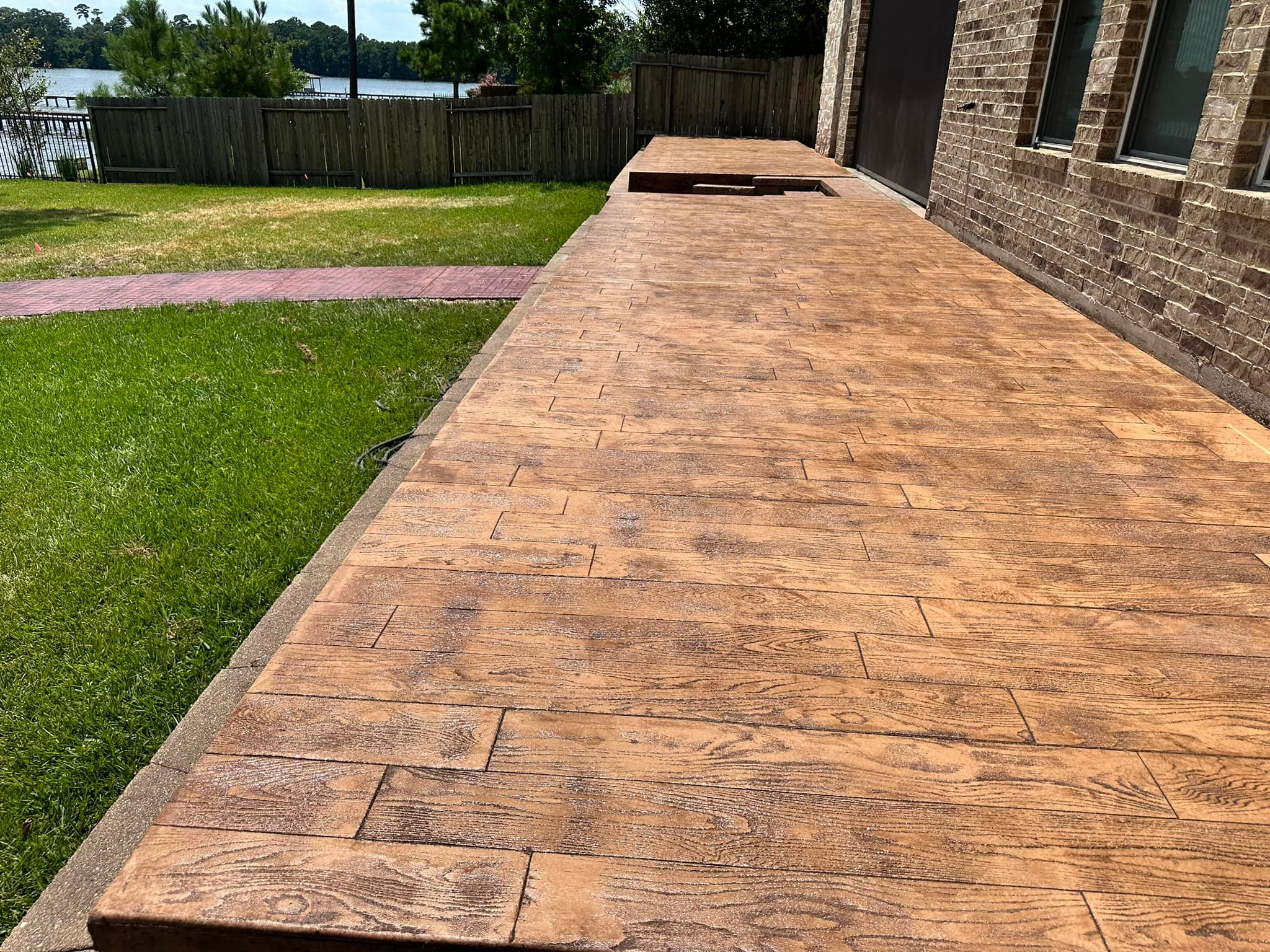
Decorative Concrete (stamped, colored, exposed aggregate): $10 - $25+ per square foot, due to increased labor and material complexity.
2. Per Cubic Yard (CY)
While clients are often quoted per square foot, contractors internally calculate concrete material costs by the cubic yard. For very large or complex structural pours, the quote might be broken down this way.
Material Only: This primarily reflects the cost of the ready-mix concrete itself.
Conversion: One cubic yard of concrete covers approximately 81 square feet at a 4-inch thickness, or 54 square feet at a 6-inch thickness.
Typical Material Cost (Houston Area): Standard ready-mix concrete can range from $110 to $160 per cubic yard, depending on mix design and supplier.
3. Fixed Bid (Lump Sum)
For complex projects, or those with many variables, a fixed bid provides a single total price for the entire scope of work.
Comprehensive: This includes all labor, materials, equipment, site prep, and overhead.
Detailed Scope: Requires a very detailed understanding of the project scope, specifications, and potential challenges to avoid cost overruns for the contractor.
Risk Allocation: The contractor takes on more risk for unforeseen issues, so their bid might include a contingency.
4. Time and Materials (T&M)
Less common for residential concrete pouring, but sometimes used for repair work or projects with highly uncertain scope.
Hourly Rates: Clients are billed for labor hours at an agreed-upon rate, plus the actual cost of materials and equipment used.
Transparency (with risk): Offers transparency on individual costs but the total price is not known upfront, which can be a concern for clients.
For most residential and standard commercial concrete projects in Houston, Cincos Concrete typically provides comprehensive fixed bids or per-square-foot pricing that covers all aspects of the project, ensuring clarity for our clients.
Factors That Significantly Influence Concrete Costs
Understanding the general pricing components is a start, but numerous specific factors can significantly swing the final price of a concrete project.
1. Project Size and Scale
Volume Discounts: Larger projects often benefit from lower per-unit costs for materials (e.g., concrete delivery fees are spread over more cubic yards) and labor efficiency.
Minimum Charges: Small jobs (e.g., a small repair or a tiny slab) often have a minimum charge because the fixed costs of mobilizing a crew and equipment don't scale down proportionally. For example, a concrete truck might have a "short load" fee for orders under a certain cubic yardage.
2. Concrete Thickness and Strength
Thicker Slabs: A 6-inch thick driveway will cost more than a 4-inch thick one because it requires 50% more concrete material and often more robust reinforcement and labor.
Higher PSI Concrete: Concrete with higher compressive strength (e.g., 4000 PSI instead of 3000 PSI) uses more cement and specific aggregates, increasing its cost per cubic yard. This is often needed for heavy-duty applications.
3. Reinforcement Type and Density
Wire Mesh vs. Rebar: Wire mesh is generally less expensive and suitable for lighter-duty slabs. Rebar is stronger, more costly, and essential for structural foundations, driveways, or areas under heavy load.
Rebar Size and Spacing: The larger the rebar diameter and the closer its spacing, the more material and labor are involved, leading to higher costs.
4. Site Accessibility
Easy Access: A wide-open, flat site with easy access for concrete trucks and heavy equipment results in lower labor and equipment costs.
Limited Access: Tight spaces, steep slopes, or areas requiring concrete to be pumped over obstacles or wheelbarrowed manually will significantly increase labor time and potentially require costly concrete pump rentals. Urban sites in Houston or crowded residential areas can often present these challenges.
5. Ground Preparation and Sub-base Conditions
Existing Conditions: A site with existing concrete that needs removal or significant grading issues will incur additional costs for demolition, hauling, excavation, and fill dirt.
Stable Sub-base: If the existing soil is unstable, more extensive grading, compaction, or the addition of a thicker, specialized sub-base (e.g., lime stabilization in certain Texas soils) may be required.
6. Desired Finish and Decorative Elements
Basic Finishes: A broom finish (textured for slip resistance) or a smooth trowel finish are standard and generally included in the base per-square-foot price.
Decorative Concrete: This is where costs can escalate significantly due to specialized materials, techniques, and labor time.
Colored Concrete: Achieved by adding pigments to the mix or applying stains after curing.
Stamped Concrete: Replicates the look of stone, brick, slate, or wood using rubber mats pressed into wet concrete. This is highly labor-intensive and requires skilled artistry.
Exposed Aggregate: Achieved by washing away the top layer of cement paste to expose the decorative stones or gravel beneath.
Polished Concrete: A multi-step grinding and polishing process that creates a high-gloss, durable surface, often for interior floors.
7. Geographical Location
Local Labor Rates: Wage rates for skilled concrete workers vary by region. Major metropolitan areas like Houston typically have higher labor costs than rural areas.
Material Supply: Proximity to quarries and ready-mix plants can influence material delivery costs.
Competition: The number of concrete contractors in an area can impact pricing, with more competition potentially driving prices down.
8. Project Complexity and Customization
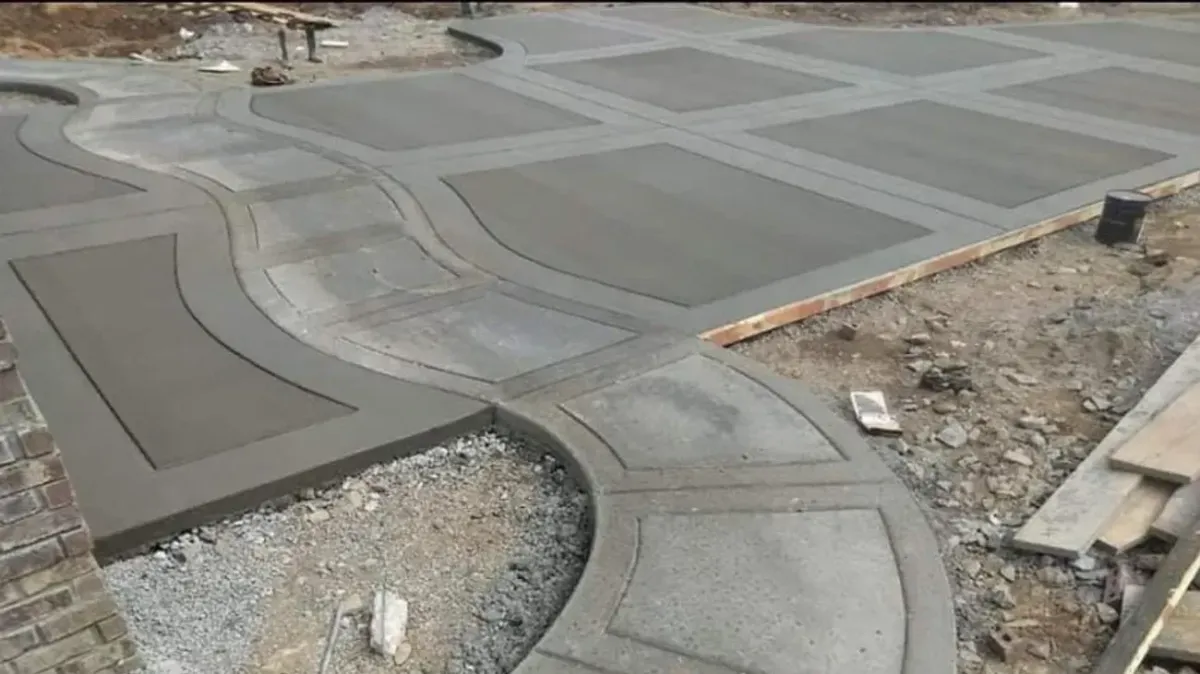
Curves and Irregular Shapes: Straight edges are simpler to form. Curves, multi-level designs, or intricate patterns require more skilled labor and custom formwork.
Integrated Features: Built-in lighting, drainage systems, steps, or custom edging will add to the overall cost.
Slope and Drainage: Ensuring proper water runoff is critical. Designing and implementing complex slopes for drainage can add to labor and planning costs.
Estimated Cost Ranges for Common Concrete Projects (Houston, TX Area)
While every project is unique, here are some general cost ranges you might expect for common concrete work, keeping in mind that these are estimates for standard quality and conditions. Cincos Concrete always provides a detailed, customized quote.
1. Concrete Driveways
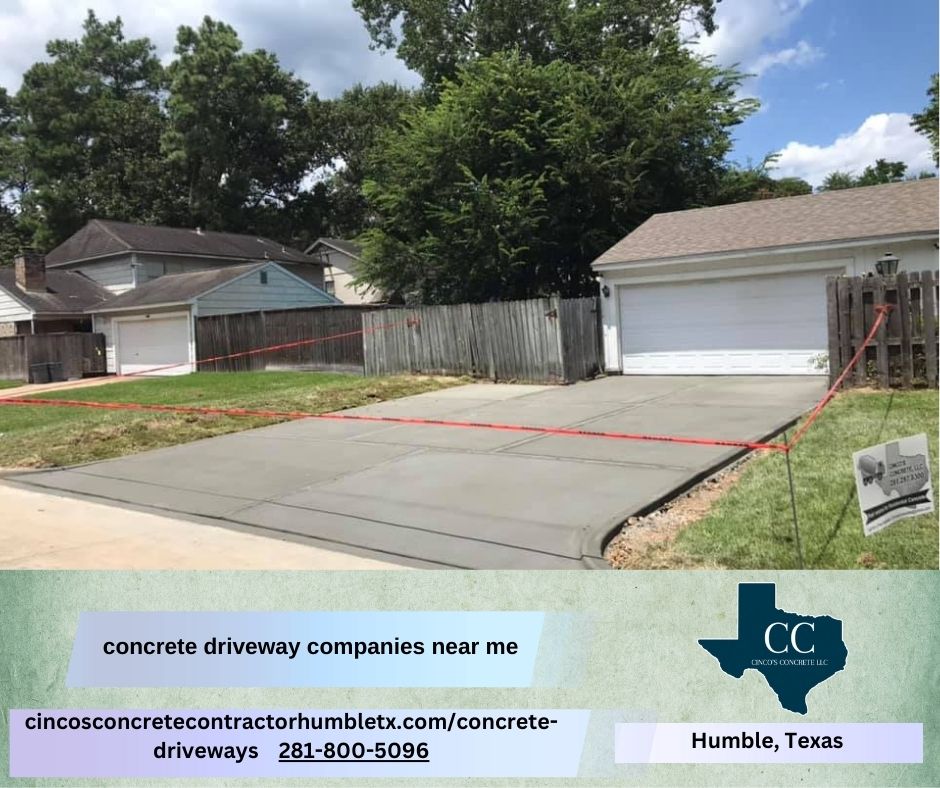
Standard (4-6 inches thick, rebar/mesh, broom finish): $7 - $12 per square foot.
With Decorative Finish (stamped, colored, exposed aggregate): $12 - $25+ per square foot.
Factors: Size, existing driveway removal, extensive grading, and access. A typical 2-car driveway (400-600 sq ft) could range from $2,800 to $7,200 for standard, or significantly more for decorative options.
2. Concrete Patios
Standard (4 inches thick, broom finish): $6 - $10 per square foot.
With Decorative Finish (stamped, colored, polished, custom shapes): $10 - $22+ per square foot.
Factors: Demolition of old patio, complex shapes, steps, and drainage requirements. A medium patio (200-300 sq ft) might cost $1,200 to $3,000 for standard, or $2,000 to $6,600+ for decorative.
3. Concrete Slabs (for sheds, garages, home additions)
Standard (4-6 inches thick, rebar/mesh, basic finish): $7 - $14 per square foot.
Factors: Thickness, reinforcement density, vapor barrier requirements, insulation, and the need for footings or thickened edges. A 10x12 shed slab (120 sq ft) could be $840 to $1,680. A 2-car garage slab (400 sq ft) might be $2,800 to $5,600.
4. Concrete Foundations (for homes)
Slab-on-Grade (monolithic, 4-6 inches thick, heavy rebar, thickened edges): $8 - $18+ per square foot.
Factors: Size of the home, soil conditions (which can require specialized engineering, deep piers, or more robust rebar in areas like Houston's expansive clay soils), vapor barriers, insulation, and plumbing/electrical conduits embedded within.
Total Cost: For an average 1,500 sq ft home, a foundation could range from $12,000 to $27,000+, depending heavily on engineering and soil specifics.
5. Concrete Sidewalks and Walkways
Standard (4 inches thick, broom finish): $6 - $10 per square foot.
Factors: Length, width, curves, and any required demolition of old walkways.
6. Concrete Repair and Resurfacing
Crack Repair: Varies widely, from a few hundred dollars for minor crack filling to over a thousand for extensive structural crack repair.
Resurfacing/Overlay: Applying a thin layer of new concrete over an existing, structurally sound slab. This can range from $3 to $7 per square foot for basic overlays, and up to $10 - $20+ per square foot for decorative stamped or stained overlays.
Factors: Extent of damage, type of repair, size of area, and desired finish.
How to Get an Accurate Concrete Quote
Given the many variables, securing a precise quote requires clear communication and specific information from the client.
1. Define Your Project Clearly
Dimensions: Provide exact length, width, and desired thickness (in inches) of the concrete area.
Purpose: Explain what the concrete will be used for (e.g., light foot traffic patio, heavy vehicle driveway, structural foundation). This helps determine strength and reinforcement needs.
Desired Finish: Specify the exact finish (broom, smooth, stamped, colored, etc.). Provide pictures if possible.
Existing Conditions: Describe the current state of the site. Is there old concrete to remove? Is the ground level or sloped? Are there tree roots or obstacles?
2. Provide Site Access Details
Obstacles: Mention any fences, narrow gates, tight turns, or overhead wires that might impede access for trucks or equipment.
Distance: Note how far the pour location is from where a concrete truck can realistically park.
3. Request Detailed Bids
Breakdown: Ask for a breakdown of costs for labor, materials, equipment, and site prep. This helps you understand where your money is going.
Inclusions/Exclusions: Confirm exactly what is included in the price (e.g., excavation, reinforcement, specific finish, sealing, cleanup, permit fees). Ensure there are no hidden costs.
Payment Schedule: Understand the payment terms, including any upfront deposits, progress payments, and final payment upon completion.
4. Obtain Multiple Quotes
Comparison: Get at least three quotes from reputable contractors. Don't automatically choose the lowest bid; compare the scope of work, inclusions, and contractor's reputation.
References and Reviews: Check references and online reviews to verify a contractor's quality and reliability.
5. Understand the Contract
Written Agreement: Insist on a detailed written contract that outlines the complete scope of work, materials, costs, payment schedule, timeline, and warranty.
Warranty: Clarify what kind of warranty is offered on the concrete work and for how long.
The Cincos Concrete Approach to Fair Pricing
At Cincos Concrete, our pricing strategy for projects in Houston, Humble, Spring, and Atascocita is built on transparency, fairness, and delivering lasting value. Our 20+ years of experience mean we have a deep understanding of local conditions, material costs, and efficient execution.
We believe that a competitive price shouldn't compromise quality. Our quotes reflect:
Expert Site Assessment: We conduct thorough evaluations of your project site to accurately assess preparation needs, access challenges, and soil conditions.
Optimal Material Selection: We specify the correct concrete mix and reinforcement for your project's longevity and performance, not just the cheapest option.
Skilled Craftsmanship: Our charges include the labor of highly experienced concrete finishers and crew members who ensure a superior result.
Efficient Project Management: Our experienced team manages every detail to minimize delays and rework, which keeps costs in check.
Comprehensive Service: Our quotes typically cover all necessary steps from initial prep to final cleanup, providing a clear, upfront cost.
We encourage clients to ask questions and fully understand their quote. Our goal is to provide a durable, beautiful concrete solution that adds value to your property for years to come, at a price that makes sense.
When you choose Cincos Concrete, you're not just getting a price; you're investing in two decades of local expertise, a commitment to quality, and a concrete solution built to endure the Texas climate and usage demands. We stand by our work, ensuring your investment is well-placed.
Ready to get a precise and transparent quote for your concrete project in the Houston area?
Contact Cincos Concrete today for a free, no-obligation estimate. Let us show you the difference that experience and dedication make.
Call us anytime, 24/7, at 281-800-5096!
Visit our website to learn more about our services and see examples of our quality concrete work: https://cincosconcretecontractorhumbletx.com/